
Privacy by physics
Radar sees range, velocity, and motion signatures, never faces. GDPR-friendly for hospitals, restrooms, bedrooms, offices, and homes.
European mmWave Radar Engineering Partner
From the first proof-of-concept on an evaluation module to a certified, mass-produced 60 GHz radar device. HALready delivers the entire V-Model under one roof: consulting, RF and PCB design, signal-processing firmware, FMEDA, HIL test bench, environmental qualification, certification, and start of production.
Live detection preview
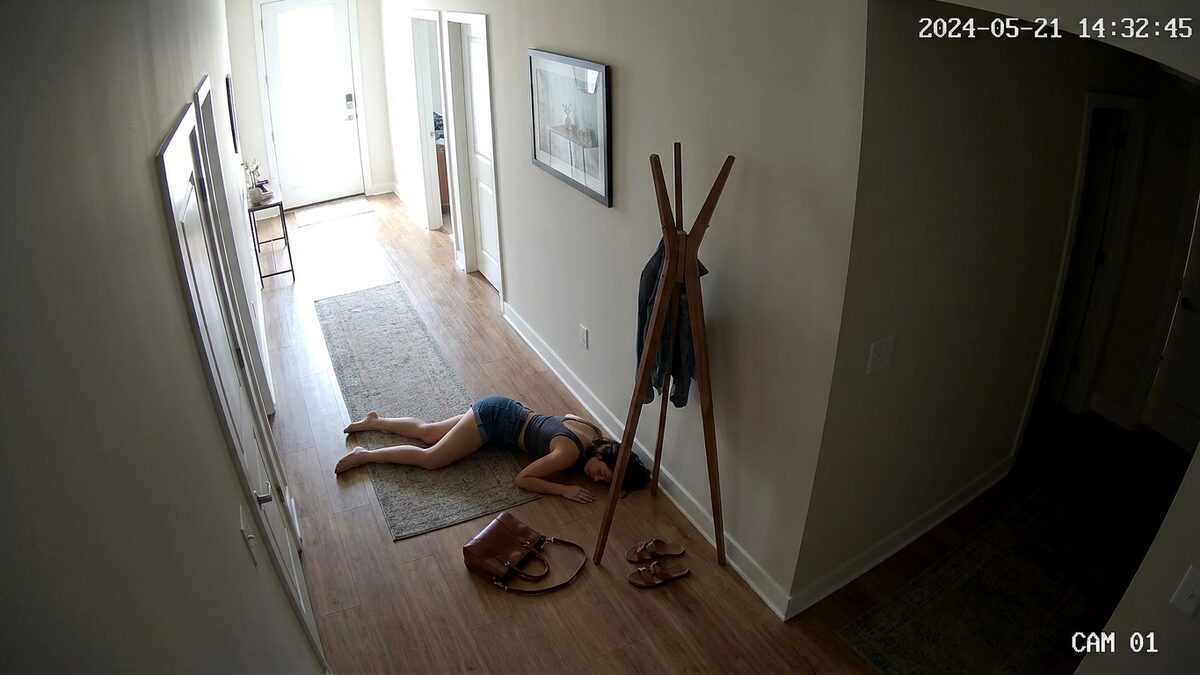
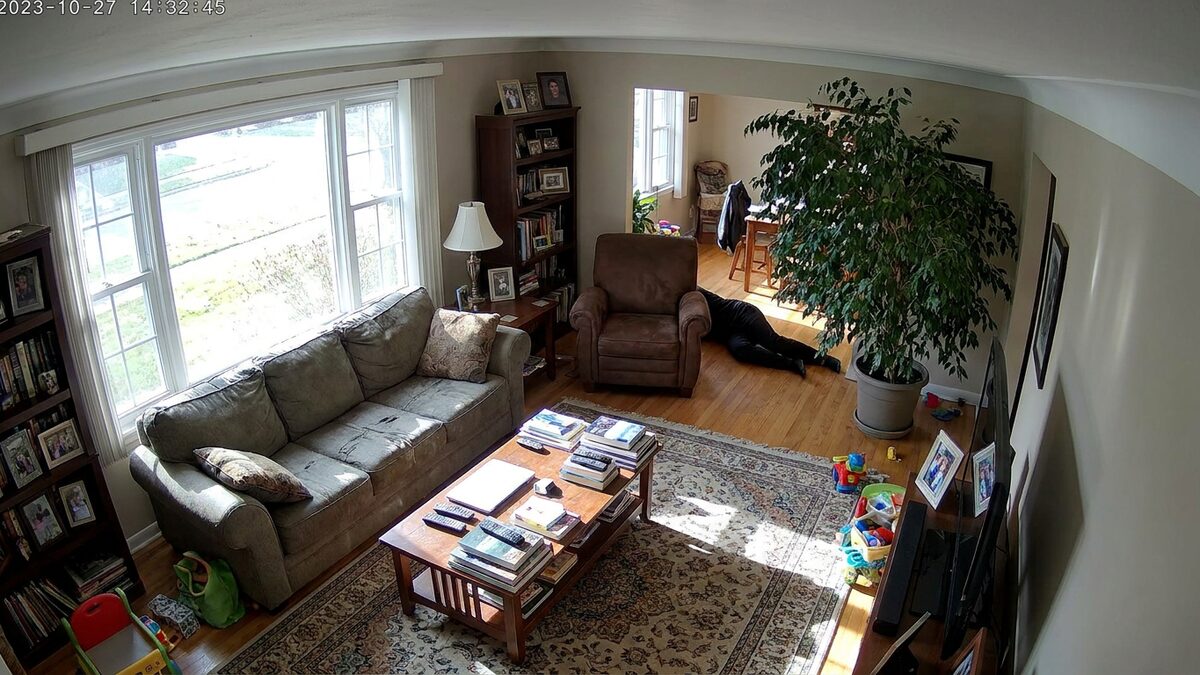
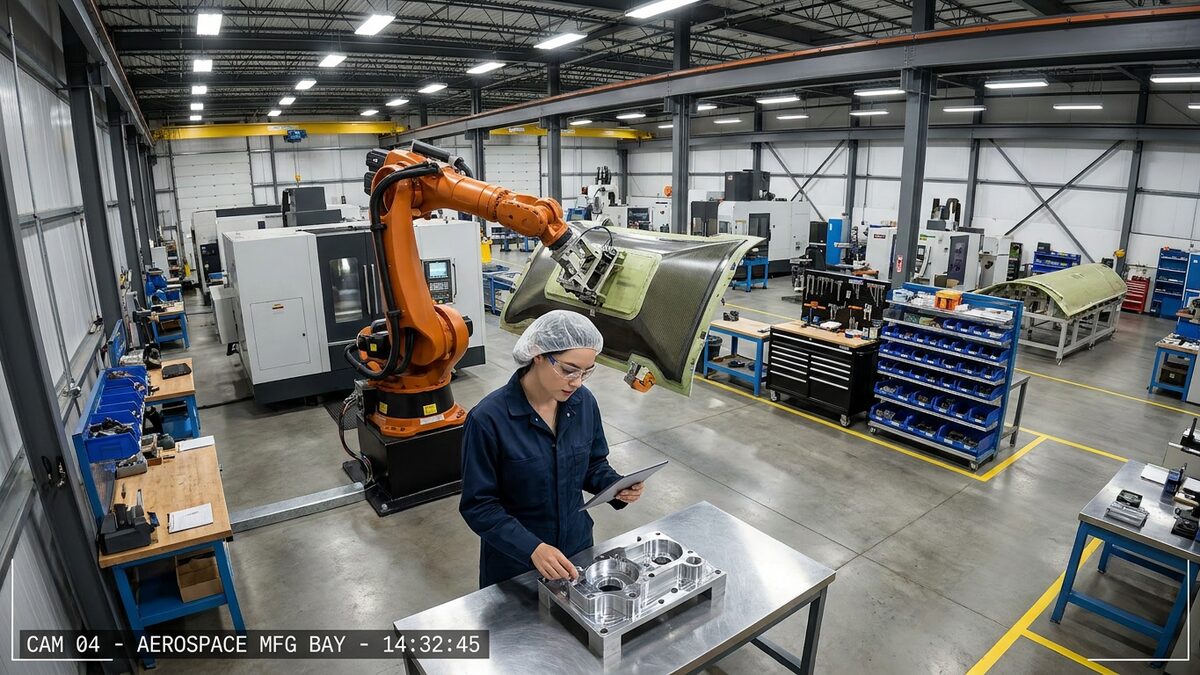
Synthetic radar frames and real deployment scenes (occupancy, fall detection, and human-in-the-loop robot safety). Each frame is annotated the way the sensor reports it.
What is mmWave radar development?
mmWave radar development is the end-to-end engineering of products that use 60 GHz or 77 GHz millimetre-wave radar sensors for perception. It includes chirp design, RF PCB layout, signal processing, edge inference, and functional safety integration through to certified production.
Most failures in radar product programs do not happen at the silicon level. They happen at the seams between RF, firmware, and safety. Hand-offs between specialist consultancies create the gaps. HALready collapses those three disciplines into one accountable engineering organisation, which is why our customers ship faster and certify more cleanly than the industry average.
When 60 GHz mmWave is the right choice
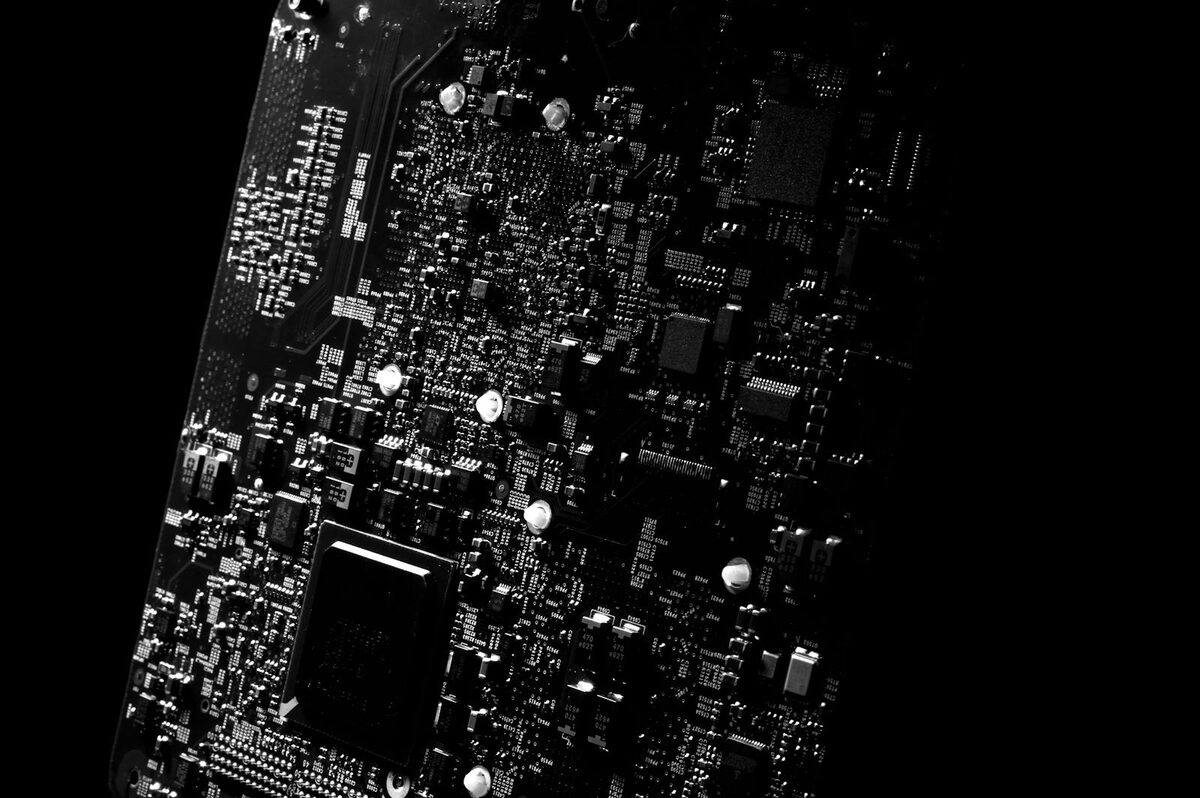
60 GHz radar operates in a globally harmonised ISM band with high bandwidth, which buys excellent range and Doppler resolution from a low-cost single-chip device. Compared to optical sensors, it offers three structural advantages that often decide product feasibility.
Radar sees range, velocity, and motion signatures, never faces. GDPR-friendly for hospitals, restrooms, bedrooms, offices, and homes.
Operates through dust, oil mist, fog, smoke, ambient light changes, and total darkness. Vision and lidar fail in those conditions; radar does not notice them.
The integrated Cortex-R4F and C674x DSP run FFT, CFAR, clustering, and ML inference on the sensor. No network dependency, no upstream privacy or latency risk.
mmWave radar is not the right answer for every perception problem. When your application needs centimetre-class 3D scanning, photographic identification, or barcode-class detail, lidar or vision wins. When your application needs robust presence, motion, vital signs, or zone monitoring under realistic environmental conditions, 60 GHz radar typically wins on cost, reliability, and privacy combined.
Four applications, four cluster pages
Our work concentrates on four application clusters, each backed by repeatable signal processing, a worked safety story, and a clear pathway to certification. Pick the cluster closest to your product and read the dedicated page.
Replace light curtains and laser scanners around robots, presses, AGVs, and machinery. Through dust, oil mist, and sparks. SIL 2 to SIL 3 capable.
Entry counting, security perimeters, retail analytics. Detects stationary occupants as well as movement, which PIR cannot do.
Ceiling-mount sensors for HVAC, lighting, and workplace analytics. Privacy-preserving alternative to cameras.
Dignity-preserving monitoring for elderly care, hospital rooms, assisted living. Detects falls within seconds, plus respiration and heart-rate.
The full V-Model under one roof
A radar product never fails because of one missing skill. It fails because skills do not talk to each other across hand-offs. Our service stack covers the entire V-Model from requirements to start of production, executed by an accountable engineering organisation rather than a chain of subcontractors.
Use-case framing, range and accuracy budgets, regulatory scoping for CE RED and FCC Part 15.255, safety concept using HAZOP or STPA, acceptance specification you can defend in front of procurement and safety stakeholders.
Chirp design, FMCW frame structure, antenna pattern selection, range-Doppler pipeline, CFAR, DBSCAN, micro-Doppler analysis, decomposition into safe and non-safe partitions for IEC 61508 compliance.
60 GHz transmission-line routing, antenna feed integration, low-loss stack-up selection, EMC pre-compliance, DfM and DfT, production-ready Gerber, BOM, and assembly drawings.
MISRA-C and AUTOSAR-grade code for Cortex-R4F, optimised DSP kernels for C674x and the hardware accelerator, edge-AI inference on the radar SoC or paired MCU, clean radar-to-host protocol over UART, CAN-FD, SPI, or Ethernet.
FMEA, FMEDA, dependent-failure analysis, diagnostic coverage budgeting, safety manual, full work-product trace required for IEC 61508, ISO 13849, IEC 62061, ISO 26262 ASIL B and D where automotive applies. See our functional safety engineering page for the full method.
Our HIL captures real-world lab scenarios as raw radar data and replays them on the device under test. Thousands of recorded scenarios run on the press of a button. Results are analysed by an in-house AI layer and cross-checked against synchronised vision recordings, so detection KPIs are verified, not assumed.
Thermal cycling, humidity (IEC 60068), vibration and shock, IP rating, EMC (CISPR, EN 61000), pre-compliance for ETSI EN 305 550 in the EU and FCC Part 15.255 in the US.
Technical file preparation, notified-body coordination, production test fixtures, calibration procedures, contract-manufacturer hand-over, and optional first-24-months warranty engineering for fielded units.
Sensor platform
For most 60 GHz programs we build on the Texas Instruments IWR6843 family of mmWave radar SoCs. Three evaluation modules cover the typical use cases. From the evaluation module we move to a custom production PCB tuned for the mechanical envelope, certification region, and target BOM.
The IWR6843 integrates four receive and three transmit channels, an on-chip Cortex-R4F for control, a C674x DSP for signal processing, and a dedicated hardware accelerator for FFT and CFAR. The combination supports range-Doppler, beamforming, and point-cloud generation at the edge with no host needed.
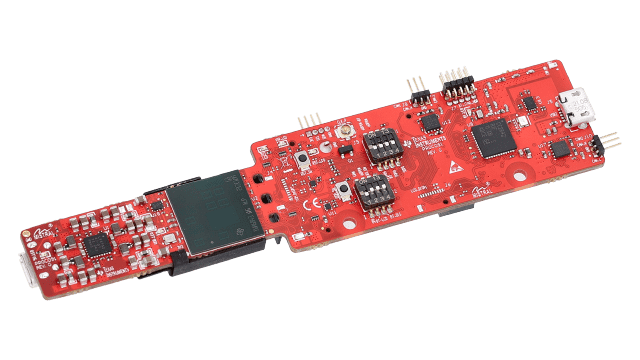
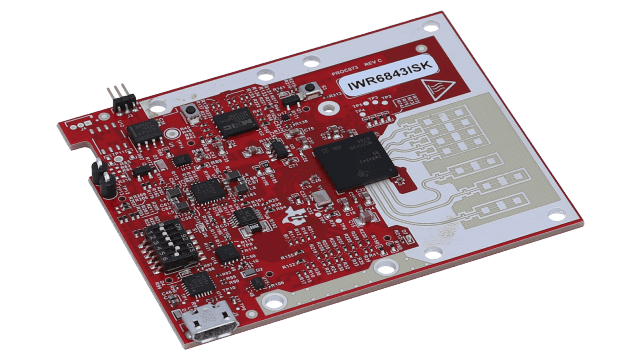
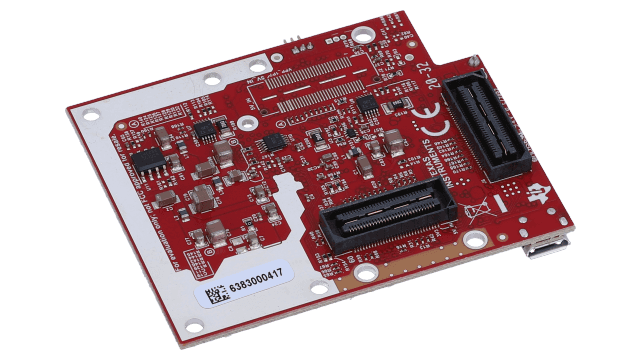
The three production evaluation modules differ mainly in antenna geometry. Choosing between them is a function of mounting geometry, target application, and certification region. Our TI mmWave EVM comparison walks through the decision in detail with a full specification table.
How we engage with enterprise teams
Programs above half a million euros involve procurement, legal, safety, and product organisations, often across two or three sites and two countries. We have engineered for that environment for ten years. The way we run an engagement reflects what enterprise stakeholders need to sign off.
Mutual NDA first, then work-for-hire IP assignment under German law. Source code, schematics, and safety artefacts live in your repository from day one. Code escrow on request for safety-critical projects.
Our engineering process aligns with ISO 9001 and ASPICE Level 2 work products. Configuration management, defect tracking, requirements traceability, and review records all match what your QMS expects.
Bi-weekly written status with risk register, monthly executive review, dedicated technical contact for your engineers, single Slack or Teams channel per program. Procurement updates synchronised with technical updates.
Most of our enterprise engagements run two to four years across multiple product revisions. We staff continuity, we keep institutional memory, and we follow your products into the field where warranty engineering is needed.
How a typical engagement runs
Thirty minutes with our principal engineer. We sanity-check feasibility, range, accuracy, regulatory exposure, and likely cost envelope. We tell you honestly if radar is the wrong tool.
Two days, on-site or remote. Output: written requirements, risk register, work-package breakdown, time and cost estimate, recommended SIL or PL target, regulatory roadmap for both EU and US where relevant.
A right-sized squad of RF, firmware, safety, and test engineers is assembled around your roadmap. You meet every member in week one and you get their direct lines.
Bi-weekly demos on real hardware. All source, schematics, and safety artefacts pushed to your repository from day one. Configuration management, defect tracking, and traceability records produced as work proceeds, not retrofitted.
HIL bench regression, environmental qualification, EMC pre-compliance, notified-body coordination in the EU, FCC submission in the US, safety case delivery. The evidence package that survives a procurement and audit.
Production test fixtures, calibration scripts, contract-manufacturer hand-over, optional warranty engineering for the first twenty-four months in the field, and an evergreen retainer for new variants if you need it.
FAQ
mmWave radar is used for perception tasks where light-based sensors fail or where privacy matters: industrial machine safety, smart-building occupancy, contactless fall detection in care homes, presence and gesture sensing in vehicles, and zone monitoring in automated cells. The technology works through dust, oil mist, fog, smoke, and darkness, and it preserves user privacy because it never captures images.
A 60 GHz radar transmits a frequency-modulated chirp from an antenna array, receives reflections from targets in the scene, and computes a range-Doppler map from the phase and time-of-flight of those reflections. Clustering and tracking turn the map into positions and velocities of people or objects, which downstream logic uses for counting, detection, or safety decisions.
Different domains. Lidar offers higher angular resolution and centimetre-class spatial accuracy but degrades under dust, fog, and direct sunlight. mmWave radar offers robust operation in those exact conditions, very low cost per unit at scale, and privacy by physics. For safety-rated zone monitoring and contactless monitoring, mmWave often wins. For high-precision 3D scanning, lidar wins.
A first technology demonstrator on an evaluation module typically runs €60k to €120k. A productised, safety-rated device including custom PCB, FMEDA, HIL bench, and environmental qualification typically runs €600k to €1.5M depending on SIL target, regulatory scope, and volume optimisation. Multi-year programs with several variants commonly exceed €2M.
A working prototype on the IWR6843 with a tailored signal-processing chain runs six to ten weeks. A productised, safety-rated device including custom PCB, FMEDA, HIL bench, and environmental qualification typically runs nine to fourteen months. Programs aiming for full IWR6843 SIL 3 certification with notified-body involvement add three to six months on top.
Yes. We engineer to IEC 61508 SIL 3, ISO 13849 PL e, and IEC 62061. HALready operates as a mmwave radar functional safety consultant Europe-wide, and our 60 GHz radar FMEDA service covers safety concept, FMEA, FMEDA, dependent-failure analysis, safety case documentation, and validation testing, all integrated with the V-Model so safety evidence is generated during development, not bolted on afterwards.
Yes. We prepare the technical file, manage pre-compliance EMC measurements, coordinate notified bodies for the EU, and accompany you through FCC Part 15.255 testing for the US. Our HIL bench and environmental setup catch issues before the certified lab, which saves costly retests.
All commercial engagements begin with a mutual NDA. Source code, schematics, and safety artefacts live in your repository from day one. We provide work-for-hire IP assignment under German law, with the option of escrow for safety-critical projects. We do not reuse client-specific code between projects.

Founder and Managing Director, HALready GmbH
Lukas leads safety-critical embedded engineering programs at HALready, with a focus on mmWave radar perception for industrial, medical, and smart-building applications. Past work spans Bosch Home Comfort, Bosch eBike Systems, and Vorwerk, with an emphasis on systems where functional safety, RF design, and signal-processing have to be co-developed rather than handed off.
Thirty minutes with our principal engineer. No slide deck. We will look at your requirements, sketch the signal chain on the call, and tell you what is realistic and what is not.
HALready GmbH · Viehmarktplatz 3 · 72336 Balingen · Germany · HRB Stuttgart 800315 · VAT DE455166354